
Understanding Pollination Groups for Reliable Orchard Harvests
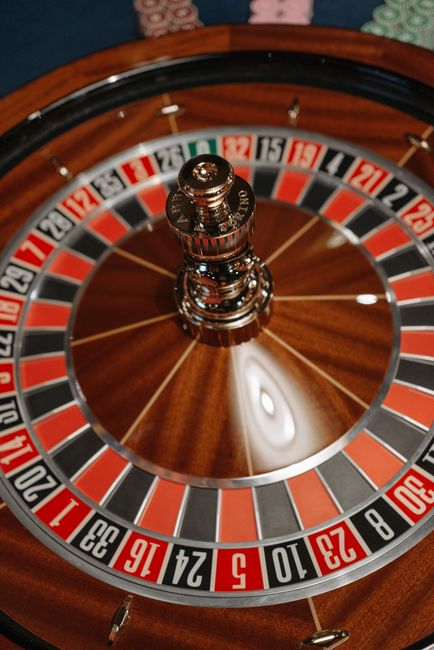
Ask ten players why a slot went cold and you'll get ten different theories — the machine is due, the casino tightened the payouts, Mercury is in retrograde. Ask a game developer and you'll get a shrug and one word: variance. The uncomfortable truth about gambling is that most of what happens to your bankroll is decided long before you press spin or post a blind. Understanding a handful of mathematical concepts won't make you a winner, but it will stop you from losing money for stupid reasons.
Random Number Generators Are Boring, and That's the Point
Every modern slot, video poker machine and online table game runs on a random number generator, or RNG. The RNG is a piece of software that produces a new number thousands of times per second, whether anyone is playing or not. When you hit spin, the game simply grabs whichever number is available at that exact millisecond and maps it to a result according to its paytable.
This matters because it kills every superstition you've ever heard:
- Slots don't have memory. A machine that hasn't paid out in three hours is no more likely to hit than one that just paid a jackpot. Online slots are actually reset after every spin — there are no "streaks" to ride.
- Timing means nothing. Hitting the button faster, slower, or on a lucky beat changes nothing. The RNG doesn't know you exist.
- Hot and cold machines aren't a thing in the way people imagine. What they're really seeing is normal variance, which we'll get to shortly.
Physical machines in land-based casinos used to be beatable through timing when they ran on old pseudorandom algorithms, but those days are over. Modern RNGs are tested and certified by labs like eCOGRA, GLI and BMM. If a game is fair, the RNG has already decided the odds before you sat down.
RTP: It's an Average, Not a Promise
Return to Player (RTP) is the percentage of all wagered money a game pays back over time. A slot with a 96% RTP returns $96 for every $100 wagered — in theory, across millions of spins.
Here's the part that trips people up. A 96% RTP slot does not pay you back 96 cents on the dollar every session. It might pay 40% of your total wagering one night and 300% another. The 96% figure only holds when you average something like ten million spins. You are one person making maybe 600 spins. Your session is a rounding error inside that number.
Some concrete RTP benchmarks worth knowing:
- Online blackjack: 99.5%+ with basic strategy, one of the best bets in any casino.
- Baccarat (banker bet): around 98.94%, with a tiny 1.06% house edge after commission.
- European roulette: 97.3% — single zero wheel, 2.7% house edge.
- American roulette: 94.7% — the double zero wheel nearly doubles the house edge to 5.26%.
- Video poker (Jacks or Better, 9/6 paytable): 99.54% with perfect play.
- Typical online slots: 94% to 97%, with jackpot games often sitting closer to the lower end.
If you take one idea from this article, it's this: the gap between a 94% slot and a 97% slot is enormous over a year of play. On $10,000 of wagering, that's a $300 difference in expected loss for zero extra entertainment. For up-to-date information, visit debet.poker.
Variance Is the Reason Your Session Looks Nothing Like the Math
Variance measures how wildly results swing around the average. Two slots can share the same 96% RTP and behave completely differently. One pays small sums constantly, the other is a dead spin factory that occasionally coughs up 5,000x.
High-variance games are designed to feel brutal. You might play 300 spins and see your balance halve before anything meaningful lands. Low-variance games feel gentler and drain slower, but their big wins are modest. Slot volatility is usually published on the info screen now, so you can match the game to your bankroll:
- Low variance: good for small bankrolls or grinding bonuses. Think 50–100 spins of reasonable fun.
- Medium variance: the balanced middle ground most players should default to.
- High variance: only play if you can afford 400+ spins without a meaningful win, because that's exactly what can happen.
Bankroll management is really variance management. A common rule of thumb is to have at least 200 bets in your session bankroll. If you're spinning $1 a goes, you want $200 minimum. That won't guarantee survival, but it gives the math room to breathe.
Poker Is Skill, but the Rake Still Eats You
Poker is the one major casino game where a good player can genuinely win long-term, and it's worth understanding why. In cash games, you're not playing the house — you're playing other people, and the house takes a slice called the rake. That rake is your true opponent.
A typical online cash game rakes 5% of the pot, capped at $3. At a full ring of six players, that means roughly 60 to 80 big blinds are removed from the table every hour, distributed across everyone. To beat the game, you need to win more from your opponents than the rake takes from you.
This is why game selection matters as much as strategy. Sitting in a lineup full of solid regulars is a rake-paying exercise. The profitable players seek soft tables, use tracking software sensibly within the rules, and avoid overplaying marginal hands. Tournament poker is different again — no rake per pot, just a one-time fee, often 8–10% of the buy-in.
The House Edge Never Sleeps
Every game in a casino, online or otherwise, is built on a mathematical edge that guarantees profit for the operator given enough volume. The only variable you control is how much volume you give them and at what price.
That means the smart player's checklist looks something like this:
- Choose games with the lowest house edge you're actually happy playing.
- Read the RTP and volatility before you deposit, not after you're stuck.
- Size your bets so a normal losing streak doesn't wipe you out.
- Use bonuses carefully — wagering requirements can turn a generous-looking offer into a terrible deal if you wager on a low-RTP game.
- Set a stop-loss and a stop-win before you start. Write them down. Then actually leave.
The Only Real Edge Is Knowing When to Stop
Nobody breaks even at slots. The math makes it impossible over the long run, and anyone telling you otherwise is selling something. But you can absolutely make your money last longer, pick fairer games, and avoid the expensive mistakes that turn a fun evening into a regret.
Treat RTP, variance and the house edge as the price of admission rather than enemies to outsmart. The player who understands they're paying for entertainment — and pays a fair, controlled price for it — has already beaten the gambler who thinks they're solving a puzzle. That's the only edge that reliably pays out.
LEAVE A COMMENT