
How to Choose the Right Apple Tree for Small Gardens
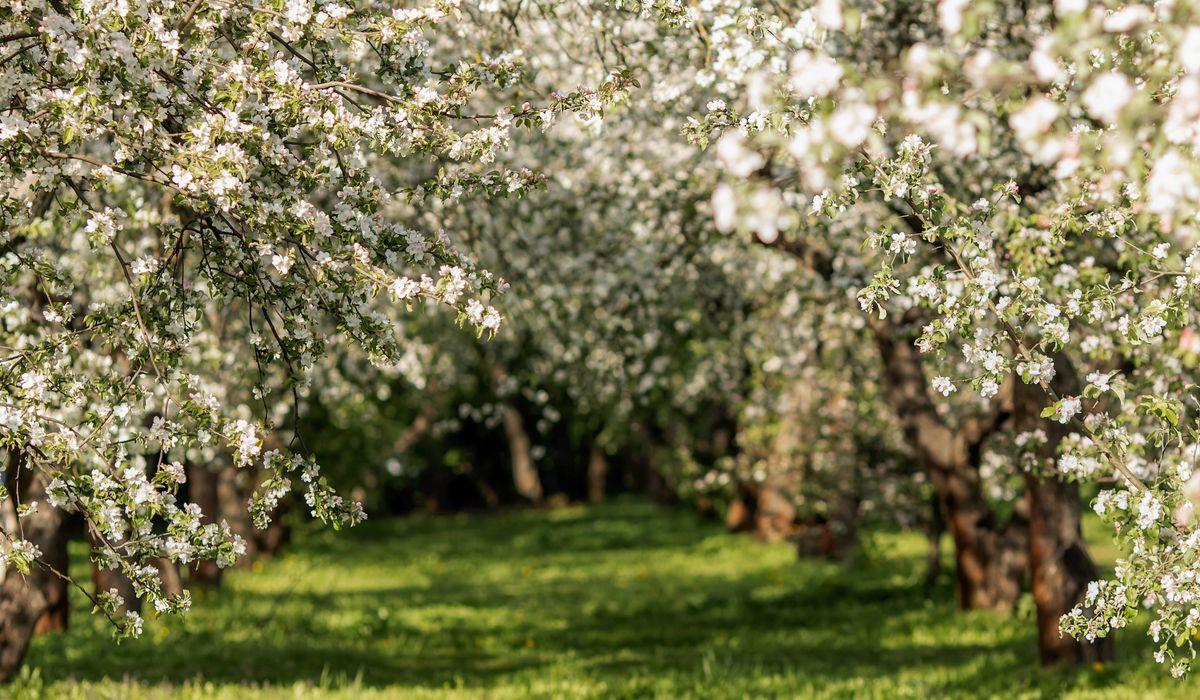
An orchard is a long-term planting, and that is both its pleasure and its weakness. The trees stay put for years, so the pests that find them also stay put. A strip of bare earth between the rows, mown to within an inch of its life, offers nothing to the predators that would otherwise keep greenfly, codling moth and pear midge in check. Companion planting changes that. It works on two fronts: strongly scented plants confuse insects that hunt by smell, and flowers feed the hoverflies, lacewings, ladybirds and parasitic wasps that do the real pest control for you.
Why an Orchard Suits Companion Planting
Unlike a vegetable bed, an orchard gives you permanent structure. You know exactly where the tree roots run, where the mower goes and where the wind funnels down the rows. That makes it straightforward to plan bands of flowers and herbs that come back to the same spot each year.
Think of it as three jobs to fill. First, scent masking — hiding the smell of tender apple and plum shoots from aphids and moths. Second, trap cropping — giving pests something tastier than your fruit so they gather where you can deal with them. Third, habitat — keeping nectar and pollen available from April to October so beneficial insects never leave the site. Marigolds, chives and nasturtiums between them cover all three, and none of them costs much more than a packet of seed.
Marigolds: Small, Bright and Busy
Two very different plants share the name, and both earn their place. French marigolds (Tagetes patula) release compounds from their roots that suppress soil eelworm, and their pungent foliage genuinely does seem to put aphids and whitefly off the scent. Pot marigolds (Calendula officinalis) are hardier, flower earlier and later, and are magnets for hoverflies.
Sow French marigolds under cover in March or April and plant them out after the last frosts, usually late May in most of the UK. Space them 20–25cm apart in bands at the edge of the tree canopy rather than jammed against the trunk. Calendula can be sown direct from April onwards; a September sowing often overwinters in mild districts and gives you flowers the following spring. Deadhead regularly and they will keep going until the first sharp frost.
Chives and Other Alliums: Confusing the Nose
Chives, garlic chives and Welsh onions all carry sulphur-rich aromas that mask the scent of fruit foliage. Growers have long used them against carrot root fly and aphids, and there is a reasonable case for them around apples and pears too — especially against woolly aphid, which is drawn in by scent and then shelter.
- Common chives flower in May and June; the pink heads are superb for bees, so leave a few to open.
- Garlic chives flower in late summer, filling the August gap when hoverflies are hunting for nectar before laying eggs.
- Welsh onions are evergreen and tolerate light foot traffic, useful along a path edge.
Plant them in clumps in a ring roughly 30–45cm out from the trunk. Their roots are shallow and fibrous, so they take very little water or nutrient from the tree, but do keep the trunk itself clear — you want air moving around the bark, not damp vegetation pressed against it.
Nasturtiums: The Sacrificial Crop
Nasturtiums are the honest workhorses of the trio. Blackfly adore them, and a colony on a nasturtium leaf is a colony that is not on your young apple shoots. Cabbage white butterflies will also lay on them in preference to anything else nearby.
The trick is to check the undersides of the leaves once a week and squash the colonies before the aphids grow wings and move on. If you would rather not squash, a firm jet of water every few days knocks them back well enough. Sow direct in late May, either at the ends of rows or in pots beside the windbreak, where they can sprawl without smothering anything. Compact varieties such as 'Tom Thumb' suit the space between trees; trailing types are better along a fence. Both flowers and leaves are edible, so a handful in a salad is your reward. Cut the plants back hard in September — left to themselves they self-seed everywhere and can smother small herbs.
Where to Plant, and How to Keep It Tidy
Bare strips between rows are the easiest place to start. A metre-wide nectar strip down the middle of each alley, sown with marigold, phacelia, borage and a little clover, will bring in predators from early summer onwards and give you somewhere to walk without treading on the trees' roots.
Around the tree bases, work in rings:
- Years one to three: keep a clear metre of bare, mulched ground around young trees. Competition matters more than companion planting at this stage. Use annuals only, planted outside that circle.
- Established trees: plant chives and marigolds in a ring from 30cm outwards, leaving the trunk and graft union well clear.
- Winter: cut everything back and keep the vegetation short near the trunk. Tall, dry tussocks around a tree make perfect runs for mice and voles, which will happily gnaw bark.
Never let a companion plant touch the trunk or the graft union, and resist the urge to pile mulch up against the bark — collar rot is a far greater risk to a young tree than any aphid.
Making the System Work Through the Season
Companion planting reduces pressure; it does not remove it. Give it the best possible chance by following a few simple habits.
- Never spray broad-spectrum insecticides. You would kill the hoverflies and lacewings along with the pests, and you would have to start again from scratch.
- Go easy on nitrogen. Rich, sappy growth is a banquet for aphids. A balanced mulch is plenty.
- Water the companions while the trees establish. Stressed marigolds stop flowering, and a flowerless marigold is just a weed with ambitions.
- Keep notes. Varieties, sowing dates and which trees suffered worst. After two or three seasons you will know which combinations genuinely earn their space in your orchard.
Start small — a single row of marigolds and a few chive clumps — and let it spread as you see what works. An orchard floor in flower is a far more pleasant place to spend a June morning, and the fruit tends to show it.
LEAVE A COMMENT