
Propagating Fruit Trees from Cuttings and Grafts
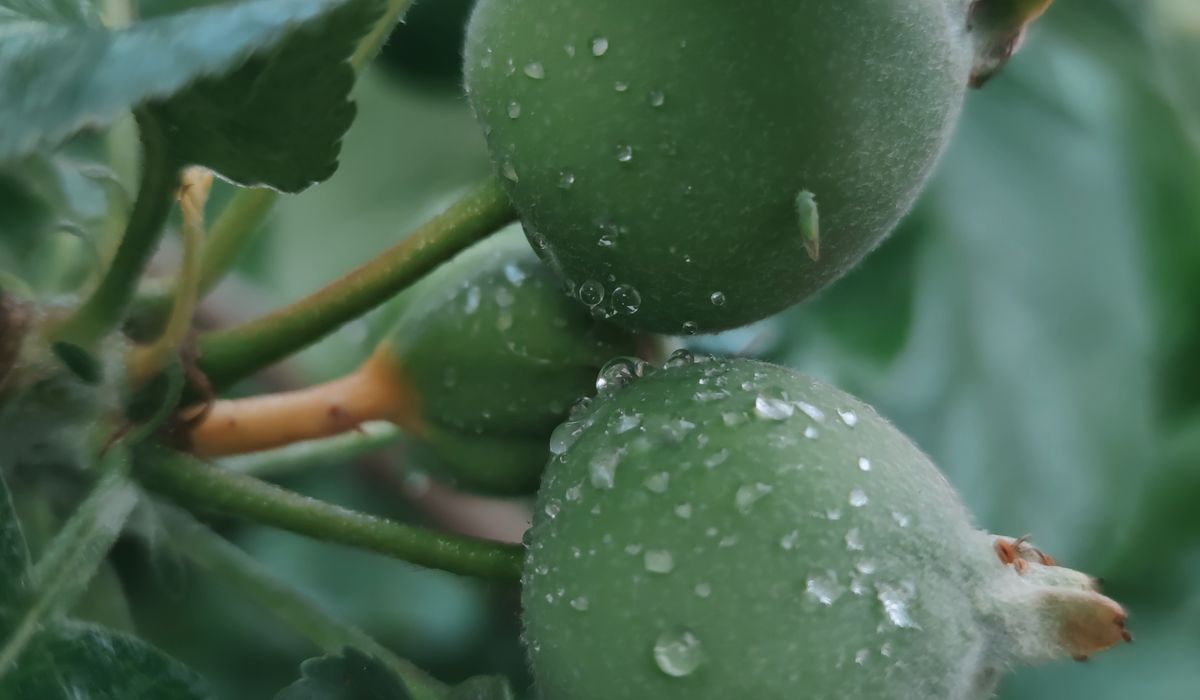
Why bothering to thin at all
It can feel perverse to walk along a branch laden with tiny green fruitlets and start picking them off. But a tree that sets a huge crop is not necessarily a tree that will give you a good harvest. Left to its own devices, an apple tree will usually carry far more fruit than it can bring to a decent size, and the consequences show up later in the season.
Every fruit is a demand on the tree's resources. When hundreds of them are competing for water, sugars and nutrients, they all end up small, dull and often poorly flavoured. The weight also drags branches down, and a heavy crop on a young tree can snap limbs or distort the framework you spent years building. Heavy cropping also exhausts the tree's reserves, which is one of the main reasons apple trees slip into biennial bearing, cropping lavishly one year and barely at all the next.
Timing: wait for the June drop
Apples naturally shed some of their crop in early summer, a process known as the June drop. It usually happens in late June or early July, though the exact date shifts with the weather and the variety. Small, yellowing or insect-damaged fruitlets fall to the ground and the tree keeps what it can support.
Thinning before this is largely wasted effort, so hold off until the drop has finished. The ideal moment is when the remaining fruitlets are roughly the size of a marble, around 20 to 25mm across. At that stage they are big enough to handle easily but the tree has not yet invested much in swelling them. If you are thinning by hand, a dry evening is ideal, as the fruitlets snap off cleanly.
How many to leave
Apples form in clusters of five or six, with one central "king" fruit surrounded by smaller ones. The aim is to reduce each cluster to a single fruit, or two where the variety is naturally small or the tree is strong and well established.
- Dessert apples: leave one fruit per cluster, spaced roughly 10 to 15cm apart along the branch.
- Large cooking varieties such as Bramley: one fruit per cluster and 15 to 20cm between fruits, as each apple will swell enormously.
- Small fruited varieties and crabs: two per cluster is plenty, spaced about 8 to 10cm.
- Young or weak trees: be more ruthless, not less. A two-year-old tree is better carrying a dozen good apples than a hundred tiny ones.
As a rough guide, an apple needs the energy from around 40 to 50 healthy leaves to reach a really good size. If you can picture that as you work along a branch, the spacing starts to make sense.
The technique
Work with both hands where you can, steadying the branch with one while you remove fruitlets with the other. Take hold of the fruit and twist gently, or snip the stalk with a small pair of scissors or nail scissors if the cluster is tight. Damaged spurs and torn stalks can let in canker, so a clean break or a clean cut matters more than speed.
Choose the fruit to keep, rather than the ones to remove. Look for a well-shaped, unblemished apple in a good position, ideally with plenty of room to grow. Remove anything misshapen, scarred, holed by codling moth or covered in scab. The central king fruit is often the largest, but it is also the one most likely to be distorted, so do not keep it out of habit.
Which trees to prioritise
If time is short, thin your best dessert varieties first, as these show the greatest improvement in size, colour and sweetness. Next come young trees, which need to put energy into roots and structure, and any variety you know to be a biennial bearer. Trees that regularly crop heavily every other year respond particularly well to thinning, as it evens out the cycle.
If your apples go for juice or cider, you can thin far more lightly, or not at all. Gardeners growing for bulk rather than beauty can usually leave the tree to sort itself out.
After thinning
A thinned tree still needs looking after. Water thoroughly in dry spells while the fruit is swelling, and mulch around the base to hold moisture in the soil. A light feed of a potassium-rich fertiliser in midsummer helps with fruit quality and next year's bud formation.
Check the tree a fortnight later and remove any fruitlets that have since been damaged, and clear up fallen fruit from the ground to reduce pests and disease. Come autumn, you should notice the difference: fewer apples, but heavier, brighter and far better eating than anything the tree would have managed unaided.
LEAVE A COMMENT